Flip Top
Molde de tampa
Bump Lotion &
Molde de fechamento
O principal fornecedor confiável de moldes para tampas plásticas da China, com mais de 15 anos de experiência. Serviço em um só lugar - entrega rápida, vasta experiência e qualidade superior.
Seu ponto único
Parceiro da Cap Mould
A Topworks é o principal fornecedor confiável de moldes para tampas de plástico da China, com mais de 15 anos de experiência. Nosso serviço completo oferece entrega rápida, vasta experiência e moldes para tampas de alta qualidade.
Temos uma ampla seleção de moldes de tampas plásticas de alta qualidade que são ideais para o desenvolvimento, a prototipagem e a produção de produtos.
Nós nos dedicamos a Fabricação de moldes de tampas de qualidade com aço para moldes P20, H13 e S136. Nossa linha de moldes para tampas inclui:
- Molde de tampas articuladas
- Molde de bico Yorker
- Molde da tampa do teto do disco
- Molde de tampa flip-top
- Molde de tampa push-pull
- Molde de tampa com abertura/fechamento por torção
- Molde de tampas de flapper


Molde da tampa, Molde de tampa flip top, molde de loção para inchaço e Molde de fechamento - fabricado com aço de molde P20, H13 e S136 para máxima durabilidade e precisão.
Moldes para tampas e fechamentos


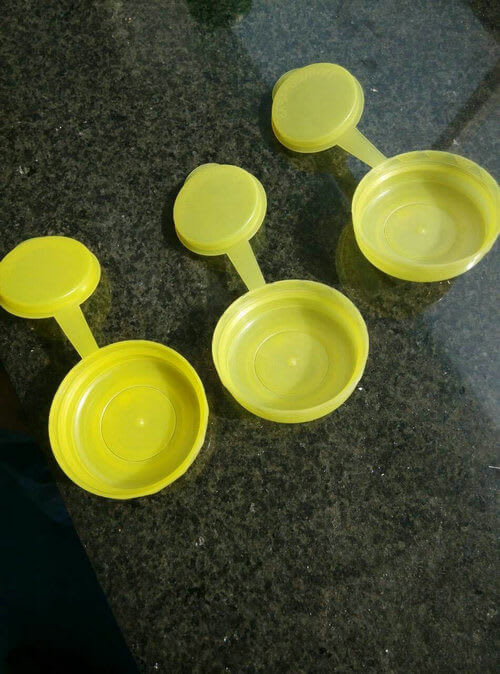


Como projetar uma tampa de rosca,
Moldes de tampa e fechamento
Os rebaixos na parte interna de uma tampa - geralmente roscas internas, nervuras de encaixe ou rebaixos maiores que fazem parte do formato do produto - exigem decisões cuidadosas de projeto. As roscas internas geralmente ocorrem em tampas, mas também aparecem em muitos produtos técnicos, como ferragens para tubos de plástico. O método planejado de fabricação (moldagem ou usinagem após a moldagem) deve ser considerado. A molde de tampa poderia ser muito mais simples se a tampa fosse rosqueado após a moldagem. É mais importante chegar ao produto com o menor custo total do que ao método de fabricação mais elegante.
Se a rosca precisar ser moldada, há duas opções de como remover o produto do núcleo: desparafusando ou removendo.
O projetista deve considerar cuidadosamente as quantidades de produção necessárias. A usinagem após a moldagem pode reduzir significativamente a complexidade e o custo do molde da tampa para produções de menor volume.
As roscas projetadas de acordo com o padrão geralmente consistem em mais de um passo. Em muitas tampas de rosca para garrafas, potes e tubos de pasta de dente, dois a seis arremessos são bastante comuns.
Mais voltas significam produtos mais longos, mais plástico, mais tempo de moldagem e ciclos mais longos. Em muitos fechamentos, um comprimento de rosca de um ou dois passos é suficiente para um bom poder de retenção.
O anel de stripper segura a tampa para que ela possa ser desrosqueada do núcleo. A tampa requer nervuras ou projeções na parte externa, onde um dispositivo externo de desrosqueamento pode se encaixar. O projeto desses auxílios deve ser discutido com o projetista de moldes.
Qualquer método de desparafusamento requer moldes para tampas ou máquinas especiais. Os ciclos de moldagem também são mais lentos do que os de produtos comparáveis que não precisam ser desparafusados.
A decapagem é a solução mais fácil e, em geral, a de menor custo para ejetar a tampa ou o fecho. Como a molde de tampa se abre e, depois que a cavidade se afasta do lado do núcleo, a ejeção começa, causada pelo avanço do decapador.
Ao fazer isso, a tampa de plástico é empurrada sobre a saliência no núcleo, fazendo com que o plástico se expanda para que a parte dentro da ranhura possa deslizar para fora.
A facilidade de remoção depende de muitos fatores igualmente importantes: ângulo da rosca, altura da projeção, diâmetro e o tipo de plástico e seu módulo de elasticidade.
Ângulo da rosca (α): Quanto maior o ângulo, mais difícil será a ação de remoção. Um ângulo agudo (α = 90°) torna a ejeção praticamente impossível - a tampa de plástico seria cortada na ranhura em vez de ser retirada.
Altura “h” vs. Diâmetro “d”: A porcentagem de alongamento f é diretamente proporcional à altura h e inversamente proporcional ao diâmetro d:
C = dπ (circunferência do círculo central)
Quanto maior o diâmetro d da tampa, mais facilmente ela sairá de sua ranhura. Uma tampa de plástico relativamente rígido pode ser removida se d for grande, mas se romperá durante a ejeção se d for pequeno.
Número de roscas (passos): A maneira mais fácil de remover é especificar apenas uma rosca (um passo), de modo que a rosca removida não deslize para uma ranhura adjacente, mas continue a deslizar ininterruptamente para fora do núcleo.
Observe também que o acabamento da ranhura tem alguma influência sobre a facilidade de remoção, especialmente com materiais que exigem alto polimento para uma boa ejeção.
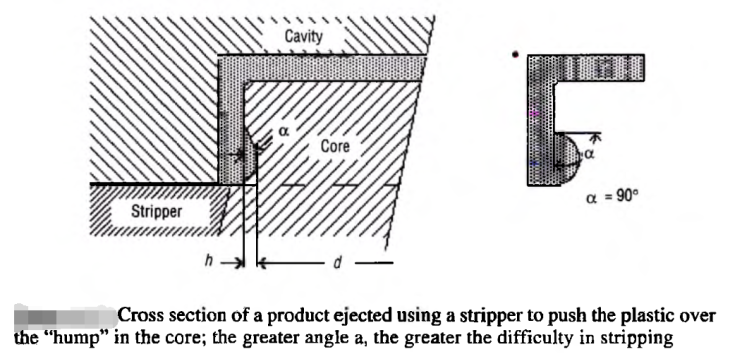
Figura 1 - Influências da decapagem
Influências que afetam a capacidade de remover uma tampa. Seção transversal de um produto ejetado usando um removedor para empurrar o plástico sobre a “saliência” no núcleo.
Quanto maior for o ângulo α, maior será a dificuldade de remoção. As roscas dos parafusos podem ter um ângulo de 90° se for absolutamente necessário, Mas isso definitivamente exigiria o desparafusamento, pois não seria possível removê-lo.
Observe que muitas roscas de parafuso - especialmente as roscas para tampas - têm formas padronizadas que originalmente evoluíram de roscas em garrafas e potes de vidro. Esses padrões devem ser seguidos e suas grandes tolerâncias devem ser usadas para obter o máximo de benefícios para as roscas de plástico.
Ao considerar todos os fatores que influenciam a remoção, o projetista conseguirá criar uma tampa de rosca com o formato correto da seção transversal da rosca e uma relação h/d adequada, de modo que até mesmo um plástico relativamente rígido possa ser facilmente removido, sem a necessidade de um desrosqueamento molde de tampa.
Em aplicações de quantidade, o núcleo também pode ser removido do molde e desparafusado do produto fora do molde - manualmente ou usando dispositivos de fixação.