Blow Mold Manufacturer: Extrusion, Injection & Stretch Blow Molds
We design and build high-quality blow molds — extrusion bottle molds, injection blow molds and stretch blow molds — with a team whose designers and moldmakers have over 20 years in the PET blow industry. Aluminium, P-20, NAK-55, stainless and beryllium-copper tooling for packaging, beverage, automotive and household containers.

- Extrusion / injection / stretch blow
- 6061 & 7075 aluminium, P-20, 1.2316
- PET bottles & industrial containers
- 20+ years blow-mold experience
Three types of blow mold
Extrusion bottle mold
A continuously extruded parison is clamped and inflated. The workhorse for bottles, containers and larger hollow parts.
Injection blow mold
A preform is injection-moulded, then blown — precise necks and a clean finish for smaller, higher-quality bottles.
Stretch blow mold
The preform is stretched as it blows, aligning the polymer — standard for PET, raising strength, clarity and barrier with less material.
Blow mold materials
| Material | Why it is used |
|---|---|
| Aircraft aluminium 6061 / 7075 | Light, fast even cooling, quick to machine — common for blow cavities |
| Acero para herramientas P-20 | Durable general-purpose mold steel for longer runs |
| NAK-55 | Pre-hardened steel with good polish and machinability |
| Stainless DIN 1.2316 | Corrosion resistance for demanding or long-life tooling |
| Beryllium-copper | High-conductivity inserts for fast, even cooling in hot spots |
Industries and products served
Packaging & beverage
Hot- and cold-fill beverage containers, alcohol and soft-drink bottles, motor-oil and dairy containers, food and household containers, toner PET bottles.
Industrial & automotive
Industrial tool cases, pallet systems, two-component paneling, fluid containers (washer, coolant overflow), air-induction systems and various underhood components.
Consumer
Furniture, toys and entertainment products.
Insert & specialty
Insert molding and floor panels alongside blow-molded work.
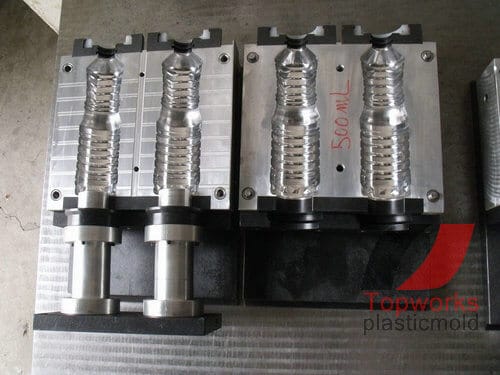
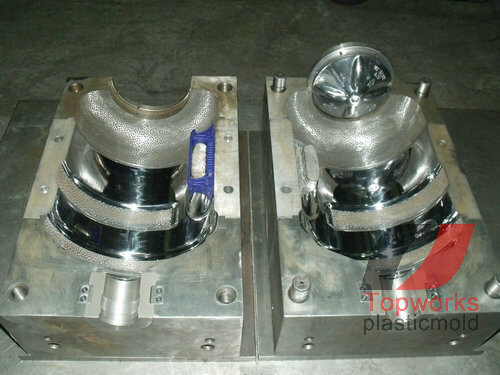
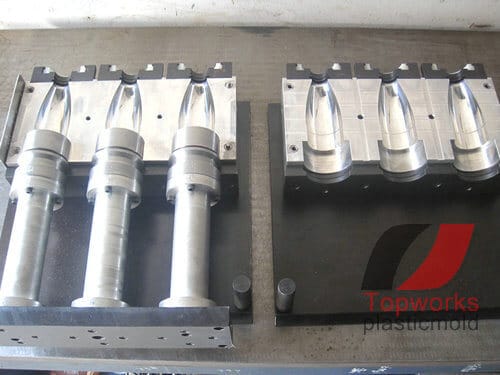
Blow mold and product gallery
A selection of blow molds and blow-molded products from our shop.








Quality control for blow molded products
The end use of the blow-molded bottle dictates the extent of inspection. Toys and housewares are less critical, where the major controls deal with weight, general dimensions, colour and rigidity. Food, beverage and pharmaceutical containers add tighter dimensional, wall-thickness and leak testing.
Need a bottle or hollow part blow molded?
Send your bottle drawing, resin (PET, HDPE, PP…) and volume. We’ll recommend the blow method, mold material and tooling, and quote it.
- Extrusion, injection & stretch blow molds
- Aluminium, P-20, stainless, BeCu tooling
- PET preform-to-bottle capability
Blow mold FAQ
What types of blow mold do you make?
Extrusion bottle molds, injection blow molds and stretch blow molds. Extrusion blow molds handle a continuously extruded parison for bottles and containers; injection blow gives precise necks on smaller bottles; stretch blow is used for PET bottles to raise strength, clarity and barrier while using less material.
What materials are blow molds made from?
Depending on the job: aircraft aluminium 6061 and 7075 (light, fast-cooling, common for blow cavities), P-20 tool steel, NAK-55, stainless steel DIN 1.2316, and beryllium-copper for high-conductivity inserts where fast, even cooling matters.
What industries use your blow molded products?
Packaging, hot- and cold-fill beverage containers, household and food containers, alcohol and soft-drink bottles, motor-oil and dairy containers, industrial tool cases, toner bottles, furniture, toys, automotive underhood and fluid-container parts, air-induction systems and more.
How are blow molded bottles quality-checked?
The end use dictates the inspection. Toys and housewares are less critical — the main controls are weight, general dimensions, colour and rigidity. Food, beverage and pharmaceutical containers add tighter dimensional, wall-thickness and leak checks.
Why is aluminium often used for blow molds?
Aircraft-grade aluminium (6061, 7075) conducts heat well, so it cools the parison quickly and evenly for faster cycles, and it is lighter and faster to machine than steel — a good fit for the lower pressures of blow molding.