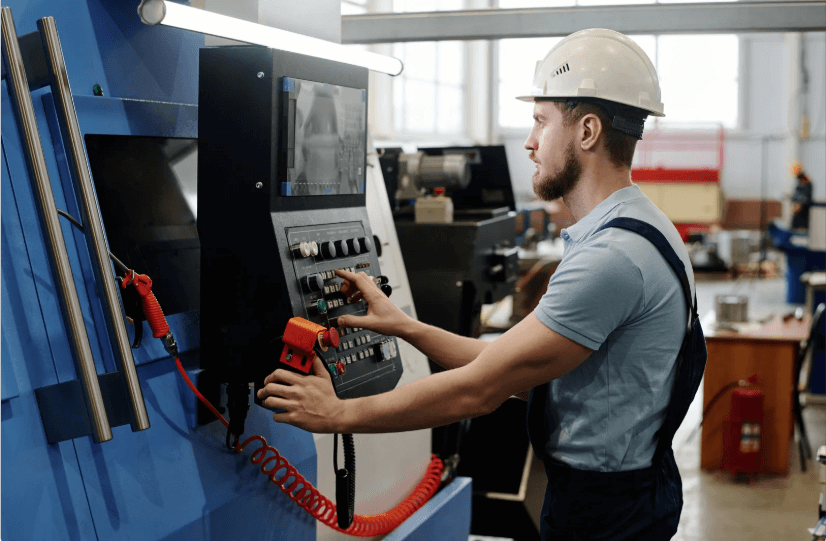
Flip Top Cap Mould, Bump Lotion & Closure Mould
China’s leading reliable plastic cap mould supplier with over 15 years of experience. One stop service — quick delivery, rich experience, top quality. Mould steel P20, H13 and S136.

- 15+ years cap mould experience
- 7 cap mould types
- P20 / H13 / S136 steel
- Design to delivery, one stop
Your one-stop cap mould partner
Topworks ist Chinas führender, zuverlässiger Lieferant von Kunststoffkappenformen mit über 15 Jahren Erfahrung. Unser One-Stop-Service bietet schnelle Lieferung, reiche Erfahrung und Top-Qualität Kappe Formen.
Wir haben eine große Auswahl an hochwertigen Kunststoffkappenformen, die sich ideal für Produktentwicklung, Prototyping und Produktion eignen.
Wir engagieren uns für Herstellung hochwertiger Verschlussformen with mould steel P20, H13 and S136.
Cap mould range
- Form für Scharnierverschlüsse
- Yorker Ausgussform
- Disc-Top Kappenform
- Flip-Top Kappenform
- Push-Pull-Verschlussform
- Twist Open/Close Cap Mould
- Klappenverschlüsse Gussform

Cap & closure mould gallery


How to design screw cap, lid & closure moulds
Undercuts on the inside of a cap — typically inside threads, snap-on ribs, or major undercuts that are part of the product shape — require careful design decisions. The planned method of manufacture (molding, or machining after molding) should be considered. The Kappenform könnte viel einfacher sein, wenn die Kappe mit Gewinde nach dem Gießen. Es ist wichtiger, das Produkt mit den niedrigsten Gesamtkosten zu erhalten als die eleganteste Herstellungsmethode.
Inside threads on cap
Wenn das Gewinde geformt werden muss, gibt es zwei Möglichkeiten, das Produkt aus dem Kern zu entfernen: durch Abschrauben oder durch Abziehen. Der Konstrukteur sollte die erforderlichen Produktionsmengen sorgfältig abwägen. Die Bearbeitung nach dem Gießen kann die Komplexität der Kappenform und die Kosten für kleinere Stückzahlen erheblich reduzieren.
Unscrewing method
Normgewinde bestehen in der Regel aus mehr als einer Steigung. In vielen Schraubverschlüssen von Flaschen, Gläsern und Zahnpastatuben, zwei bis sechs Seillängen sind durchaus üblich. More turns mean longer products, more plastic, more molding time, and longer cycles. In many closures, a thread length of one or two pitches is sufficient for good holding power.
Die Abstreifring hält die Kappe, so dass sie vom Kern abgeschraubt werden kann. Die Kappe benötigt an der Außenseite Rippen oder Vorsprünge, in die eine externe Abschraubvorrichtung eingreifen kann. Die Gestaltung dieser Hilfsmittel sollte mit dem Hersteller besprochen werden. Formenbauer.
Jede Abschraubmethode erfordert entweder komplizierte Verschlussformen oder Spezialmaschinen. Auch die Formzyklen sind langsamer als bei vergleichbaren Produkten, die nicht abgeschraubt werden müssen.
Abstreifender Auswurf (Kraftauswurf)
Das Abstreifen ist die einfachste und oft auch die kostengünstigste Lösung für das Auswerfen der Kappe oder des Verschlusses. Da die Kappenform opens and after the cavity has moved away from the core side, the ejection starts caused by the stripper moving forward. The plastic cap is pushed over the hump in the core, causing the plastic to expand so that the portion inside the groove can slip out.
Die Leichtigkeit des Abisolierens hängt von vielen ebenso wichtigen Faktoren ab: Gewindewinkel, Überstandshöhe, Durchmesser sowie die Art des Kunststoffs und sein Elastizitätsmodul.
Factors affecting stripping ability
Gewindewinkel (α): Je größer der Winkel, desto schwieriger ist das Abstreifen. Ein spitzer Winkel (α = 90°) macht das Auswerfen praktisch unmöglich - die Kunststoffkappe würde in der Rille abscheren und nicht herausziehen.
Höhe “h” gegen Durchmesser “d”: The percentage of stretching f is directly proportional to height h and inversely proportional to diameter d. The greater the cap diameter d, the easier the cap will slip out of its groove. A cap from relatively stiff plastic could be stripped if d is large, but would break during ejection if d is small.
Anzahl der Gewindegänge (Steigungen): Die einfachste Art des Abisolierens besteht darin, nur ein Gewinde (eine Steigung) festzulegen, so dass das abisolierte Gewinde nicht in eine angrenzende Rille gleitet, sondern weiterhin ununterbrochen vom Kern gleitet.
The finish of the groove also influences the ease of stripping, especially with materials requiring high polish for good ejection.
Figure 1 — Stripping influences
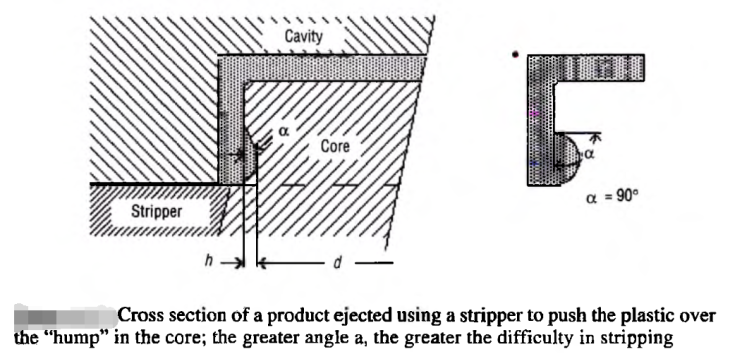
Influences affecting the ability to strip a cap. The greater the angle α is, the greater the difficulty in stripping. Schraubengewinde können einen 90°-Winkel haben, wenn dies unbedingt erforderlich ist., aber das würde definitiv ein Abschrauben erfordern - ein Abisolieren wäre nicht möglich.
Many screw threads — especially threads for closures — have standardised shapes which originally evolved from threads on glass bottles and jars. Such standards should be followed, and their large tolerances used to obtain maximum benefits for plastic threads.
Durch die Berücksichtigung aller Faktoren, die das Abisolieren beeinflussen, wird es dem Konstrukteur gelingen, einen Schraubverschluss mit der richtigen Form des Gewindequerschnitts und einem geeigneten h/d-Verhältnis zu entwerfen, so dass selbst ein relativ steifer Kunststoff leicht abisoliert werden kann, ohne dass ein Abschrauben erforderlich ist. Kappenform.
Need a cap or closure mould?
Send your cap drawing, material spec, and annual volume. We’ll reply with DFM notes, steel recommendation, and a clear quotation.
- Flip-top, hinged, disc-top, push-pull, twist, yorker, flapper
- P20 / H13 / S136 mould steel
- 15+ years cap mould experience
- Quick delivery, one stop service
Cap & closure mould FAQ
What types of cap moulds do you make?
We manufacture moulds for flip-top caps, hinged closures, disc-top caps, push-pull caps, twist open/close caps, yorker spout caps, and flapper closures — covering bottles, jars, tubes, and cosmetic packaging.
What mould steels do you use for cap moulds?
P20 for general production, H13 for high-wear and abrasive-filler applications, and S136 for corrosion resistance with aggressive resins. Steel choice depends on resin, surface requirement, and target mould life.
Should cap threads be molded or machined after molding?
It depends on volume. For high-volume production, molding the threads is more efficient — the cap mould uses unscrewing or stripping ejection. For lower volumes, machining threads after molding can simplify the mould and reduce cost significantly.
What is the difference between unscrewing and stripping ejection?
Unscrewing rotates the cap off the core — required for deep or sharp-angle threads, but needs a more complex mould and longer cycle. Stripping pushes the cap over the core hump by force — simpler and faster, but only works when thread angle, h/d ratio, and plastic flexibility allow it.
How do I know if my cap design can be stripped?
Key factors: thread angle α (must not be 90°), projection height h relative to cap diameter d (smaller h/d = easier stripping), number of pitches (one pitch is easiest), and the plastic’s modulus of elasticity. We run DFM analysis to confirm strippability before cutting steel.
What is the typical lead time for a cap mould?
30–50 days from design approval depending on cap type, cavity count, and unscrewing mechanism complexity. Trial parts and inspection reports are provided before shipment.
Can you make multi-cavity cap moulds?
Yes. Cap moulds commonly run 4, 8, 16, or higher cavities depending on annual volume and press size. Higher cavitation lowers per-part cost but increases mould investment and lead time.