
Search intent behind “buy China injection molding” is rarely academic. People typing that phrase are usually sourcing parts, comparing suppliers, or trying to understand whether manufacturing in China still makes sense for their margins. It’s commercial, but there’s always a layer of caution underneath. Nobody wants to wire a deposit overseas and hope for the best.
Table of Contents
What most buyers actually want is clarity: cost, tooling ownership, quality control, lead time, and whether the supplier will still answer emails three months later.
So let’s talk about what really happens when you buy injection molding services from China — beyond the glossy Alibaba storefronts.
Why companies still buy injection molding from China
There’s a reason procurement teams keep circling back to China injection molding, even with rising labor costs and geopolitical noise.
Tooling cost is the obvious draw. A mold that might run $25,000–$40,000 domestically can often be produced for half that price in China, sometimes less depending on complexity and steel grade. For startups launching a new product, that delta alone can decide whether a project moves forward.
But it isn’t only about price.
Chinese mold factories have built deep specialization in high-cavity molds, thin-wall parts, overmolding, and complex geometries. In many regions — Shenzhen, Dongguan, Ningbo — mold making is practically an ecosystem. Steel suppliers, CNC shops, polishing teams, hot runner distributors… they’re all within driving distance.
That concentration matters. It shortens iteration cycles.
If you’re developing consumer electronics housings, medical disposables, or automotive interior components, the right factory can move from DFM review to T1 sampling surprisingly fast.
Still, speed on paper doesn’t guarantee smooth execution.
Injection Molding Cost Calculator
Estimate the per-part production cost for plastic injection molding based on material, machine, cycle time, and secondary operations.
The real risk isn’t quality. It’s misalignment
Most injection molding factories in China are technically capable. The bigger issue is alignment — on standards, communication style, and assumptions.
A Western buyer might assume cosmetic Class A surfaces unless stated otherwise. A factory might prioritize dimensional tolerance over surface finish unless you explicitly define SPI grade. Small misunderstandings compound quickly once steel is cut.
Before you buy China injection molding services, pay attention to how the supplier handles DFM feedback. Do they push back? Do they flag undercuts, draft angle issues, gate placement concerns?
A factory that asks detailed questions before quoting is usually a better long-term partner than one that responds with a price in two hours and no commentary.
That’s not always comfortable to hear when you’re under launch pressure. But it’s practical.
Tooling ownership: clarify this early
You would think mold ownership is straightforward. It isn’t.
When you buy injection molding in China, confirm in writing:
- Who legally owns the mold
- Where it will be stored
- What happens if you move production
- Whether you can export the tool
Some factories treat tooling as leverage to retain production orders. Others operate cleanly and provide export-ready molds if needed.
If flexibility matters — for example, if you may shift part of your production closer to your end market later — address that before paying the tooling deposit. Retrofitting that agreement afterward is awkward.
If you’re unsure how mold transfers work internationally, it helps to review broader manufacturing strategy discussions (see related sourcing insights here).
Minimum order quantities aren’t always what they seem
Buyers often ask: what’s the MOQ for injection molding in China?
Technically, injection molding itself doesn’t have a strict MOQ. Once the mold exists, production runs can be small.
What factories actually care about is machine time efficiency and material setup cost.
If you need 3,000 units per month of a small ABS enclosure, that’s usually fine. If you need 300 units per year, the economics get strange.
Some suppliers will quote a “minimum run value” instead of a part count. That approach is more honest. It covers their setup time and labor without pretending the MOQ is about plastic quantity.
This is where expectations need adjusting. Ultra-low volumes sometimes make more sense with bridge tooling or even alternative processes before committing to hardened steel molds.
Lead time: the quiet variable
When people compare domestic vs. overseas molding, they often focus on per-unit price. Lead time doesn’t get the same attention — until a product launch slips.
Typical mold build times in China range from 20 to 40 days depending on complexity. Add shipping time, customs clearance, and sampling cycles, and you’re realistically looking at 6–10 weeks before stable mass production.
That timeline can stretch during peak seasons.
A subtle but important point: communication gaps add hidden time. A one-day delay per clarification email quickly turns into a week.
Factories with bilingual project managers reduce that friction significantly. It’s not glamorous, but it matters.
Quality control isn’t just inspection
Many buyers assume quality control means hiring a third-party inspection service before shipment.
That’s only the final layer.
Better results come from:
- Clear tolerance drawings
- Defined cosmetic standards
- Agreed material grades (with resin brand specified)
- First article approval process
If you’re buying China injection molding for functional parts — gears, snap-fit assemblies, components under stress — material substitution becomes a serious issue. It doesn’t happen everywhere, but it happens.
Request resin certification when needed. Not for every project, but for critical applications.
And don’t ignore shrinkage calculations. Different resins behave differently, and experienced mold designers account for that from the start.
A tiny warpage issue can be invisible in photos yet catastrophic during assembly.
Cost structure: what you’re actually paying for
When evaluating a quotation, break it down mentally:
- Tooling cost
- Unit price (based on volume)
- Packaging
- Secondary processes (painting, ultrasonic welding, insert installation)
- Shipping
Some quotes appear cheaper because they exclude finishing or packaging upgrades. Clarify early.
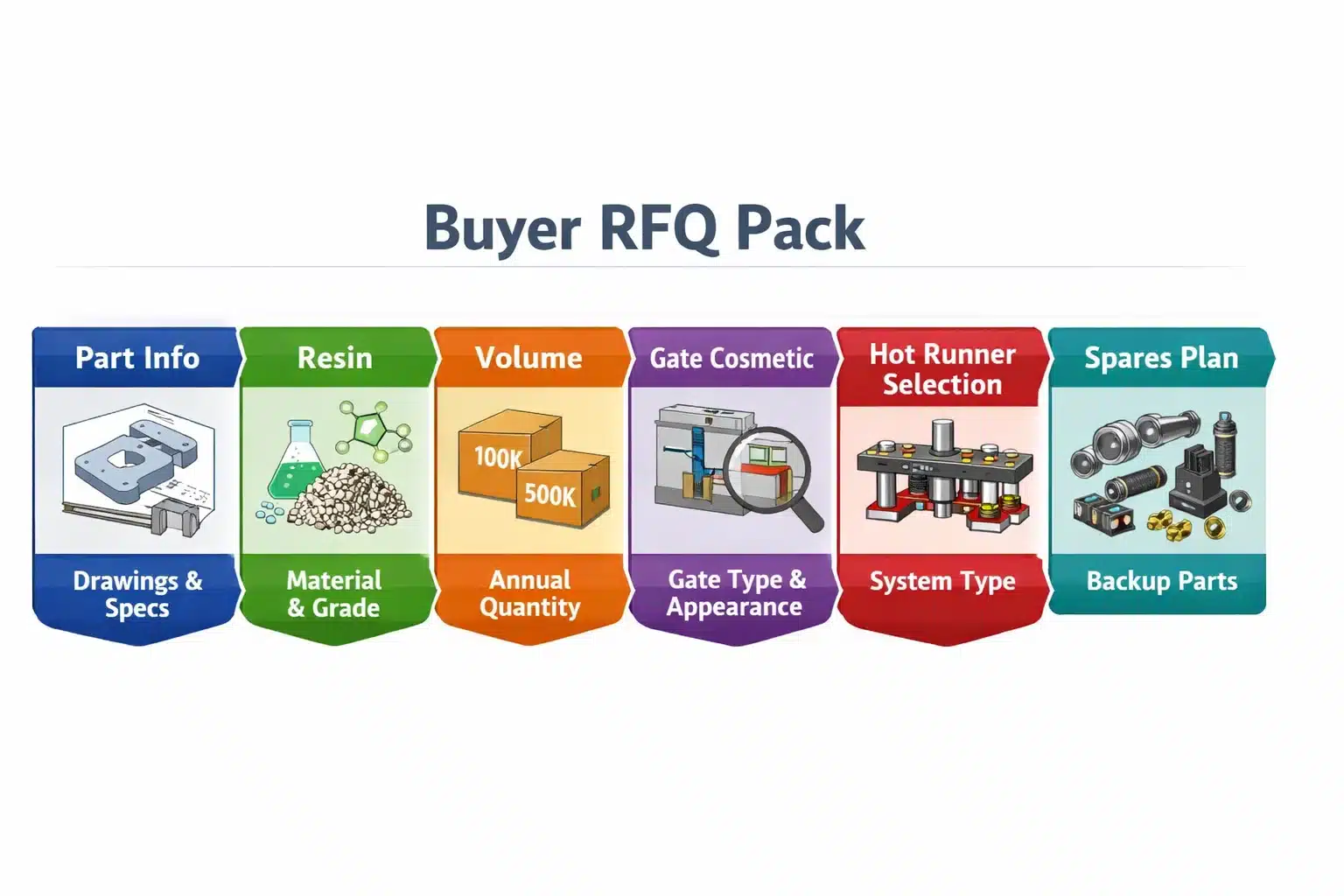
For example, matte texture molds cost more than polished surfaces. Multi-cavity molds cost more upfront but reduce per-unit cost later. Hot runner systems raise tooling cost but improve cycle time and material waste.
There isn’t a single “best” configuration. It depends on volume forecasts.
If your annual volume is 50,000 units, optimizing cycle time may not justify a premium hot runner system. At 500,000 units, it probably does.
Working relationship matters more than price
This sounds obvious, but it’s often overlooked when buyers search “buy China injection molding” and sort suppliers by unit price.
Factories vary widely in mindset. Some operate transactionally. Others aim for long-term cooperation.
You can usually tell by how they handle revisions. If a minor design change triggers defensive reactions or vague answers, that’s a red flag.
The good suppliers treat design iteration as part of the process. They’ll suggest rib adjustments, wall thickness balancing, or gate relocation without charging for every email.
Over time, that collaboration saves more money than shaving two cents off the part price.
Shipping strategy: air vs sea vs local warehousing
Shipping cost can erase apparent savings if mismanaged.
For lightweight parts with high value density, air freight may be viable. For bulky plastic housings, sea freight is standard.
Some Chinese injection molding companies now offer consolidated warehousing solutions or even overseas storage in the US or EU. That reduces delivery time and simplifies customs handling.
It’s worth asking whether your supplier has export experience to your specific market. Documentation errors create delays that rarely show up in initial quotations.
When buying from China makes less sense
It’s not always the right choice.
If your product requires extremely tight IP protection and your internal legal framework is limited, risk tolerance becomes a factor.
If your volume is low and shipping time disrupts agile product iteration, domestic molding may serve better.
If your part requires constant engineering tweaks during early market validation, geographic proximity simplifies communication.
Injection molding in China works best when:
- Design is relatively stable
- Volume justifies tooling investment
- Cost competitiveness matters
- You’re prepared to manage the supplier relationship actively
Passive buyers struggle more.
Finding reliable suppliers
Most buyers start on sourcing platforms. That’s fine as a first filter. But serious vetting goes beyond online listings.
Ask for:
- Factory photos (not stock images)
- Mold workshop details
- Machine tonnage list
- Sample parts similar to yours
- References if available
Video calls help. Walking through the facility virtually reveals more than a polished PDF brochure.
If possible, arrange a third-party factory audit before tooling payment. It’s not mandatory for every project, but for higher-value molds, it’s wise.
And don’t underestimate gut feeling during communication. If responses feel scripted or evasive, that instinct is usually pointing somewhere useful.
Payment terms and financial structure
Standard payment terms for China injection molding projects often look like:
- 40–50% deposit for tooling
- Balance after T1 approval
- Production deposit before mass manufacturing
Some suppliers are flexible once trust builds.
Avoid paying 100% upfront for tooling without milestones. And ensure invoices clearly separate tooling from part production.
If your company operates under structured procurement policies, align expectations early to avoid payment delays that strain the relationship.
Final thoughts from someone who’s seen both sides
Buying injection molding services from China isn’t inherently risky or automatically cheap. It’s strategic.
When done well, it reduces tooling cost, scales production efficiently, and supports competitive pricing in crowded markets. When done casually, it leads to avoidable delays and frustrating rework.
The difference usually comes down to preparation and communication, not geography.
If you’re evaluating suppliers right now, slow down at the quoting stage. Ask technical questions. Compare not only price but depth of response. Clarify ownership and process before steel is cut.
Plastic is forgiving. Steel isn’t.
And once a mold is built, the decisions made during sourcing follow you for years.