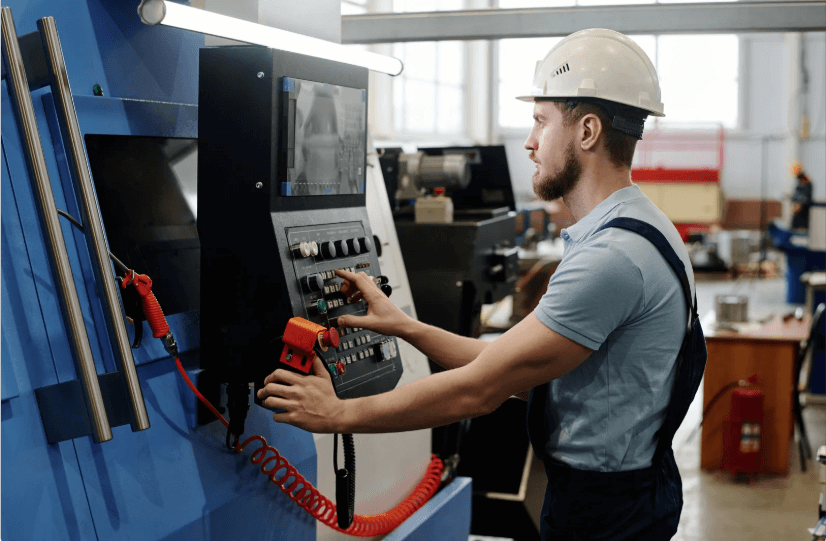
Plastic Injection Molding Services
From rapid prototyping and precision tooling to high-volume production, PIM Mold & Engineering delivers complete plastic injection molding as a single, accountable turnkey partner — design, mold making, molding, finishing and assembly under one roof.
Quick Answer — Injection Molding at PIM
- What it is: Injection molding is an automated process that produces precise plastic parts by injecting molten resin into a steel mold under high pressure.
- Run sizes we accept: Low-volume runs from 500–2,000 pieces up to millions of parts per batch.
- Lead time: Small-volume orders can begin within days of order placement for some of the fastest turnaround in the industry.
- Materials: ABS, Acetal, Nylon 6/6, PET, Polypropylene, Polyethylene, Polystyrene, TPE, K-Resin and more.
- Tolerances: Modern process control supports tolerances in the ±0.1% range on precision tooling.
What Is Plastic Injection Molding?
Plastic injection molding is a manufacturing process used to produce identical plastic parts at scale by forcing molten thermoplastic (or thermoset) resin into a precision-machined steel mold under tightly controlled pressure and temperature. Once the material cools and solidifies inside the cavity, the mold opens and the finished part is ejected — and the cycle repeats automatically, often in a matter of seconds.
It is the dominant method for making everything from electronic housings and automotive clips to medical components and consumer goods, precisely because it combines repeatable accuracy with very low cost-per-part once tooling is in place. A single CD-thickness part, for example, can be produced on a cycle of roughly 10–12 seconds. The trade-off is the upfront investment in a steel mold, which is why injection molding rewards higher volumes — the more parts you produce, the lower the amortized tooling cost on each one.
The vast majority of injection molded parts use thermoplastics — resins such as ABS, polypropylene and nylon that melt when heated and re-solidify when cooled, and can be reground and reprocessed. Thermosets and fiber-reinforced compounds can also be molded for parts that demand extra heat resistance or stiffness. The choice of polymer family shapes everything downstream: cycle time, shrinkage behaviour, achievable tolerance and finished-part performance.
At PIM Mold & Engineering we treat molding not as an isolated step but as the centre of an integrated service chain. Customers come to us for a turnkey solution: plastic part design, rapid prototyping, plastic mold making, injection molding itself, secondary operations and final assembly — all coordinated by one engineering team accountable for the whole result. That single point of accountability is what keeps a part program moving when a design change, a tolerance question or a material substitution would otherwise stall it across three or four separate vendors.
Low-Volume to High-Volume Production
Many molders only want long production runs. We deliberately welcome both ends of the spectrum, because part programs grow and a good supplier should grow with them.
Small-run manufacturing. Customers’ low-volume orders are always welcome — we routinely operate plastic injection molding orders as low as 500 to 2,000 pieces. Because we control tooling in-house, these short runs can typically begin within days of the order being placed, giving you some of the fastest turnaround in the industry for bridge production, market tests and early launches.
High-volume production. Large manufacturing runs are equally welcome. Depending on the size of the molded part, we can produce hundreds of thousands to millions of components per batch. At genuinely high volumes our pricing becomes razor-sharp, because fixed tooling and setup costs are spread across far more parts.
One package of experience and creativity
Whether you need a few hundred prototypes or a multi-million-part program, PIM offers a complete package covering plastic mold design, plastic molding (both blow molding and injection molding) and related engineering services. Contact us to discuss how we can support your specific plastic part requirements.
Injection Molding Applications
Our injection molding services support a broad range of sectors. Common applications include:
Computer & Business Equipment
Enclosures, bezels and internal structural components.
Industrial
Durable functional parts for demanding environments.
Lawn & Garden
Outdoor-grade housings, handles and fittings.
Machinery
Precision components and wear parts.
Consumer Appliance
Aesthetic and functional molded parts.
Electronics & Electrical
Connectors, housings and insulating components.
Agricultural
Rugged parts built to withstand the field.
Plastic Resins We Mold
Material selection drives strength, flexibility, clarity, temperature resistance and cost. We routinely mold the following resins and can advise on the best fit for your application:
| Material | Key Characteristics | Typical Uses |
|---|---|---|
| ABS | Tough, impact-resistant, easy to finish | Housings, consumer products |
| Acetal (POM) | Low friction, dimensional stability, rigidity | Gears, bearings, precision parts |
| K-Resin | Clear, glossy, good impact strength | Packaging, displays |
| Nylon 6/6 | High strength, wear & heat resistance | Mechanical, under-hood parts |
| PET | Strong, clear, good barrier properties | Containers, technical parts |
| Polypropylene (PP) | Chemical resistant, flexible, fatigue resistant | Living hinges, caps, housings |
| Polyethylene (PE) | Tough, moisture resistant, low cost | Caps, containers, components |
| Polystyrene | Crystal-clear or opaque, easy to mold | Cases, disposable goods |
| TPE | Rubber-like flexibility, soft touch | Grips, seals, over-molding |
The Injection Molding Process: 5 Stages
With injection molding you can manufacture plastic parts of highly complex geometry by injecting resin under tight process control and precision. It is an automated process capable of producing parts of almost any size, in almost any plastic, at very high speed. The process is driven by a series of sequential stages — and a part must perform well across all five to be considered truly moldable.
Filling
After the mold closes, molten resin is injected through the sprue and flows into the mold cavity. This takes place at the injection unit of the molding machine and fills the cavity completely.
Packing
The melt is pressurized and compressed to guarantee complete filling and faithful replication of fine surface details and textures.
Holding
Once the gate solidifies, melt can no longer flow in or out of the cavity. Holding pressure is applied to compensate for the shrinkage that occurs as the part begins to cool.
Cooling
The part continues to cool and contract inside the mold without further shrinkage compensation, stabilizing its final shape and dimensions.
Ejection
The mold opens and a mechanical ejector pushes the cooled, solidified part off the core or out of the cavity, ready for finishing or assembly.
Developing a quality part is a collaborative effort between the part designer, the mold designer, the material supplier and the process engineer. When these concurrent-engineering practices are followed early, part designers stand a far greater chance of a clean, first-time-right launch. The way a product is designed ultimately determines how well it molds — which in turn drives tooling requirements and total manufacturing cost.
Advantages & Considerations
Injection molding is exceptionally powerful, but it is not the right answer for every project. Here is an honest summary of where it excels and where to be careful.
✓ Advantages
- High production rates with short cycle times.
- Low labor content — one operator can run multiple machines, especially with automated unloading.
- Little or no finishing required; flash is minimized and gates/runners can be auto-separated.
- Very complex shapes achievable thanks to advanced mold tooling.
- Design flexibility — finishes, colors, inserts, co-injection, foam-core and fiber-reinforced parts.
- Minimal scrap — runners and gates can usually be reground and recycled.
- Close tolerances, in the ±0.1% range with precision molds and microprocessor control.
- Exploits polymer strengths — flowability, light weight, transparency and corrosion resistance.
! Considerations
- High tooling investment means the process favors higher production volumes.
- Maintenance matters — poor preventive mold maintenance raises running costs.
- Quality can be time-delayed — post-mold warpage may appear weeks later.
- Cross-disciplinary skill is required across many process details.
- Design for manufacturability — some parts aren’t well suited to efficient molding without revision.
- Lead time for mold design, build and trials can be long (shortening with CAD/CAM).
- Cost estimation is complex; expertise reduces pricing risk.
What Does Injection Molding Cost?
Total injection molding cost is driven by three things: the mold (tooling), the machine and the production volume. The mold is the major upfront investment and is amortized across the run — so cost-per-part falls steadily as quantities rise. As an indicative guide for current equipment economics:
| Machine size (clamp force) | Typical new-machine price (USD) | Best suited to |
|---|---|---|
| Small — under 100 tons | ~$30,000 – $50,000+ | Small parts, prototyping, short runs |
| Medium — 100–500 tons | ~$50,000 – $200,000 | Most general production parts |
| Large — 500–1,000 tons | ~$200,000 – $800,000 | Large housings, automotive parts |
| All-electric vs. hydraulic | 20–40% premium, ~30–50% energy savings | High-precision, high-cycle work |
Beyond the press itself, a realistic budget should include installation, auxiliary equipment (chillers, dryers, granulators) and of course the mold. Because so many variables interact, accurate quoting takes experience — and a slightly inaccurate estimate on a thin-margin job can turn a profit into a loss. The deeper the molder’s knowledge, the lower the risk to your program. That is precisely the expertise PIM brings to every quote.
Designing Parts That Mold Well
Part designers should remember that how a product is designed ultimately determines its moldability — and therefore its tooling requirements and unit cost. Beyond the obvious question of how a part will be molded, designers must weigh its overall shape and specific features, and whether minor modifications could meaningfully lower cost without compromising function.
Many factors — the design of the tool and the manufacturing conditions among them — affect the final properties of a molded part and can add to the complexity of the result. The strongest outcomes come from concurrent engineering: looping the mold designer, the resin supplier and the process engineer into the design conversation early, rather than handing off a finished drawing and hoping it molds. A part that satisfies the requirements of all five process phases is a part that launches cleanly and stays in spec.
Secondary Operations & Assembly
A molded part rarely ships straight off the machine. The real value of a turnkey molder is everything that happens after ejection — the finishing and assembly steps that turn a raw molding into a market-ready product. Because we handle these in-house, we eliminate the freight, lead time and finger-pointing that come with shuttling parts between separate subcontractors.
Common secondary operations include trimming and degating, ultrasonic welding and heat staking, pad printing and labeling, insert installation, painting and surface finishing, and the addition of threaded inserts or fasteners. From there we move into sub-assembly and final assembly, kitting and packaging — delivering a finished, inspected product rather than a box of loose components. For programs that combine molded and purchased parts, this consolidation under one roof is often where the largest hidden savings are found.
Precision, Tolerances & Quality Control
Repeatability is the whole point of injection molding, and modern process control is what makes it possible. Microprocessor-controlled machines, precision-built molds and well-tuned hydraulics allow dimensional and weight tolerances in the ±0.1% range on suitable parts — though achieving and holding that level demands genuine operational skill in constant attendance, not just good equipment.
One subtlety every buyer should understand is that quality is not always visible immediately. Post-mold warpage, for example, can render parts unusable because of dimensional changes that continue for weeks or even months after molding. That is why we emphasize sound part and tool design up front, validated process windows, and inspection regimes that confirm parts are stable — not merely that they looked correct on day one. Getting the process right early is far cheaper than chasing dimensional drift in production.
Why Choose PIM Mold & Engineering
Choosing a molding partner is really choosing a team that understands the full lifecycle of a plastic part. PIM Mold & Engineering offers integrated, turnkey services so you have a single accountable partner from first sketch to finished, assembled product. We combine design support, in-house mold making, both injection and blow molding, secondary operations and assembly — backed by genuine engineering depth and a willingness to take on the short, fast runs that many shops turn away. The result is faster turnaround, fewer hand-off errors and a complete package of experience and creativity for your plastic-related needs.
What sets that experience apart is breadth. We can advise on resin selection before a drawing is finalized, flag a feature that will trap gas or cause sink before steel is cut, recommend the most cost-effective tooling approach for your projected volumes, and then carry the same understanding through molding, finishing and assembly. Clients return to us not because any single step is unique, but because the whole chain is coordinated by people who have seen where plastic part programs go wrong — and know how to keep yours on schedule and on budget. Whether you are validating a brand-new design or scaling a proven product to millions of units, we would welcome the chance to quote your work and show what an accountable, end-to-end molding partner can do.
Frequently Asked Questions
What is the minimum order quantity for injection molding?
PIM welcomes small-run manufacturing and routinely runs orders as low as 500 to 2,000 pieces. For low volumes, production can typically begin within days of order placement.
How many parts can you produce in a single batch?
Depending on the size of the molded part, we can produce from hundreds of thousands up to millions of components per batch. Very high volumes earn our most competitive pricing.
Which plastic materials can you mold?
We routinely mold ABS, Acetal (POM), K-Resin, Nylon 6/6, PET, Polypropylene, Polyethylene, Polystyrene (clear and opaque) and TPE, and can recommend the best resin for your application.
What are the five stages of the injection molding process?
The process runs through filling, packing, holding, cooling and ejection. A part must perform well across all five stages to be considered fully moldable.
What tolerances can injection molding achieve?
With precision molds, microprocessor controls and well-managed hydraulics, tolerances in the ±0.1% range on dimensions and weights are achievable for suitable parts.
How much does injection molding cost?
Cost depends on the mold, the machine and the production volume. Tooling is the main upfront investment and is amortized over the run, so cost-per-part falls as volumes rise. The most reliable figure comes from a quote based on your specific part and quantity.
What services does PIM offer beyond molding?
PIM provides a turnkey solution: plastic part design, rapid prototyping, mold making, injection and blow molding, secondary operations and final assembly — all coordinated by one engineering team.
Ready to Start Your Molding Project?
From a few hundred prototypes to millions of production parts, PIM Mold & Engineering delivers precision plastic injection molding with fast turnaround and complete turnkey support.