
Injection Molding Troubleshooting Guide
A quick-reference chart mapping the common injection-molding defects — flash, weld lines, short shots, burn, sink and more — to their process and tooling causes. Find the defect, read down to the likely causes, and adjust one variable at a time.

- 11 common defects mapped
- Process & tooling causes
- Temperature, pressure, venting, gates
- One-variable-at-a-time method
Defect vs cause chart
Read across the top for the defect, then down the left for possible causes. A dot marks a cause associated with that defect.
| Possible reason | Water mark | Streak | Flash | Weld line | Poor surface | Unfilled | Burn | Colour problem | Deform | Thick | Crack |
|---|---|---|---|---|---|---|---|---|---|---|---|
| Low barrel temp | ● | ● | ● | ● | ● | ● | |||||
| High barrel temp | ● | ● | ● | ● | ● | ||||||
| High injection pressure | ● | ● | ● | ||||||||
| Low injection pressure | ● | ● | ● | ● | |||||||
| Short packing time | ● | ||||||||||
| Long packing time | ● | ● | ● | ||||||||
| High injection speed | ● | ● | |||||||||
| Low injection speed | ● | ● | |||||||||
| Poor cooling | ● | ● | |||||||||
| Poor mold temp control | ● | ● | ● | ||||||||
| Long cycle | ● | ||||||||||
| Short cycle | ● | ● | |||||||||
| Big runner or sprue | ● | ||||||||||
| Small runner or sprue | ● | ● | ● | ● | ● | ||||||
| Poor gate position | ● | ● | ● | ● | |||||||
| Low clamping force | ● | ● | |||||||||
| Poor venting | ● | ● | ● | ● | |||||||
| Insufficient feeding | ● | ● | ● | ||||||||
| Improper drying time/temp | ● | ● | ● | ||||||||
| Foreign material | ● | ● | ● | ● | |||||||
| Poor clean | ● | ● | ● | ||||||||
| Improper releasing agent | ● | ● | |||||||||
| Slow flowing | ● | ● | |||||||||
| Quick flowing | ● |
How to use the chart
Troubleshooting is a process of elimination. Use the chart to narrow the field, then work methodically.
- Identify the defect precisely — flash, short shot, weld line, burn, sink and so on.
- Read down the column to see which causes are linked to it.
- Change the most likely cause first — usually barrel/mould temperature, pressure, venting or gate/runner.
- Adjust one variable at a time and observe, so you know what actually fixed it.
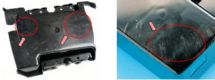
Defect examples




Fighting a molding defect?
Tell us the defect and your part — or send samples. We’ll help trace it to a tooling or process cause and fix it.
- Defect diagnosis & DFM review
- Tooling & process fixes
- Mould repair & optimisation
Troubleshooting FAQ
What causes flash in injection molding?
Flash is commonly caused by high barrel temperature, low injection pressure, long packing time, low clamping force, or a runner/sprue and gate mismatch. Check clamp force and barrel temperature first.
What causes an unfilled (short shot) part?
Low barrel temperature, a small runner or sprue, poor gate position, insufficient feeding or slow flowing. It usually means the melt is too cool or the flow path too restricted to fill the cavity.
What causes weld lines?
Low barrel temperature, high injection pressure, a small runner or sprue, poor gate position, poor venting or slow flowing. Weld lines form where two flow fronts meet, so gate position and melt temperature are the main levers.
What causes burn marks?
Burn (dieseling) is caused by high barrel temperature, low injection pressure, high injection speed, short cycle, poor venting, improper drying, foreign material or poor cleaning. Trapped air that cannot vent is the classic cause.
How do I use an injection molding troubleshooting chart?
Find your defect in the column headers, then read down to see which process or tooling causes are associated with it. Adjust the most likely cause first — usually temperature, pressure, venting or gate/runner — and change one variable at a time.