A USA Mold Buyer’s Guide: What You Need to Know
Injection moulds get treated like a commodity — bought on price and delivery by people who do not always see the process behind them. Having both sold moulds to buyers and bought them as a purchasing manager, here is a practical framework: six questions that separate a good tooling decision from an expensive one.

- Judge tools on cycle time, not just price
- Match each mould to a supplier’s strength
- Consolidate suppliers to gain leverage
- Reputation and payment terms are signals
The commodity trap
There is a common belief that plastic moulds are a commodity — interchangeable, bought on price and delivery alone. That belief is exactly what causes bad tooling decisions.
The role of a mould buyer is to enable a profitable manufacturing process, or to quietly undermine it. Buy the wrong tool and productivity suffers for years. You cannot calculate the right mould price from part size, number of slide actions, steel type and location on a spreadsheet — it is not a straightforward process, and treating it like one is how companies end up with cheap tools that cost a fortune to run.
Six questions every mould buyer should ask
How does this mould actually run?
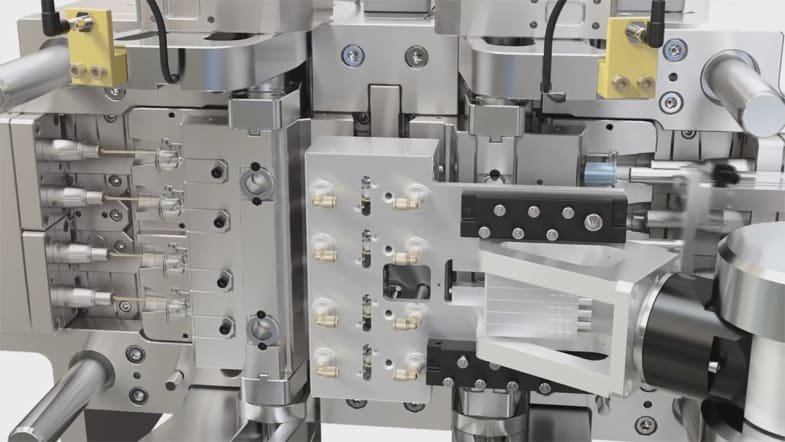
Plastic is heated, injected and cooled into a part. The faster heat is pulled out of the tool, the faster the cycle. Ask how the supplier will design cooling and melt delivery — that is where your per-part cost lives.
What are you best at building?
Every shop has a sweet spot — large tools, high-cavitation precision, fast turnaround. Sourcing a mould to a supplier’s strength gets you the best balance of price, quality and delivery. Sourcing against it gets you problems.
How many suppliers should I use?
Fewer, well-chosen suppliers give you more buying power and a tool package that fits your needs. Consolidation is leverage — as long as each shop is still matched to what it does best.
Can I justify a higher price?
Two tools do the job: cycle-time reduction and scrap reduction. A tool that runs faster with less waste justifies a higher price quickly on volume. The headline number is not the cost.
Are you reliable on schedule and payment?
A supplier who pays their own steel houses and sub-suppliers on time is one whose delivery date you can trust. Reputation is a proxy for the discipline that keeps your tool on track.
Where are you, and does it fit my program?
Location drives lead time, freight and communication. Factor it into the match between mould and supplier — it is a real cost, not an afterthought. See how timing and shipment affect the schedule.
The case for fewer, better suppliers
Consolidation is one of the highest-leverage moves a tooling buyer can make — done without losing the match between tool and shop.
As a purchasing manager at a tier automotive supplier and medical moulder, I inherited an approved list of more than 40 mould suppliers. I cut it to 18 — not at random, but by mapping each remaining supplier to the mould types and locations they were strongest at. That let me negotiate the best balance of price, quality and delivery by always sourcing to a shop’s sweet spot. On a multi-million-dollar tooling budget, buying the right moulds from the right shops saved six figures.
Justifying a higher tool price
A higher-priced mould can be the more profitable purchase — if it buys you a shorter cycle and less scrap.
Cycle-time reduction
Every second saved per shot compounds across the life of a high-volume part. Cooling and melt-delivery design is where a good supplier earns a premium.
Scrap reduction
Fewer rejects means more good parts per hour and less wasted resin. A tool that runs clean pays for itself in yield.
Buying a mould and want a straight answer?
Send your part and target volume. We’ll talk through steel, cooling, cycle time and the real cost per part — the way a good supplier should — and give you a quote you can justify.
- Engineering-led quotes, not a sales pitch
- DFM before steel is cut
- Factory-direct in Huangyan, China
Mould buyer’s FAQ
How should a mould buyer evaluate a supplier beyond price?
Price and delivery are only two inputs. A mould should be judged on cycle time, scrap rate, steel and build quality, the supplier’s fit for that specific tool, and their reliability on schedule and payment terms. A tool that costs more but runs a shorter cycle with less scrap is usually the cheaper tool over its life.
Why does cycle time matter more than mould price?
Because you pay the mould price once but pay the cycle time on every shot. A cooling and melt-delivery system that shaves a few seconds off each cycle, and cuts scrap, pays back a higher tool price quickly on a high-volume part. Ask suppliers how they will design cooling and gating to reduce cycle time, not just what the tool costs.
Should I consolidate my mould suppliers?
Usually yes, up to a point. Reducing a large approved-supplier list to a smaller group of shops — each sourced for the mould types they are best at — increases your buying power and cuts cost, while still matching each tool to a supplier’s strengths. One purchasing manager cut an approved list from 40+ shops to 18 and saved six figures on a multi-million-dollar tooling program by doing exactly this.
Does a supplier’s location affect mould sourcing?
Yes. Location affects lead time, freight, communication and how easily you can support the tool later. It is one of the criteria for matching a mould to a supplier’s sweet spot — some shops are best for large tools, some for high-cavitation precision, some for fast turnaround.
Why does a mould supplier’s payment reputation matter to me as a buyer?
A supplier who pays their own steel houses and sub-suppliers on time is a supplier whose schedule you can trust. Payment reputation is a proxy for financial stability and reliability — the same discipline that keeps their supply chain moving keeps your tool on schedule.