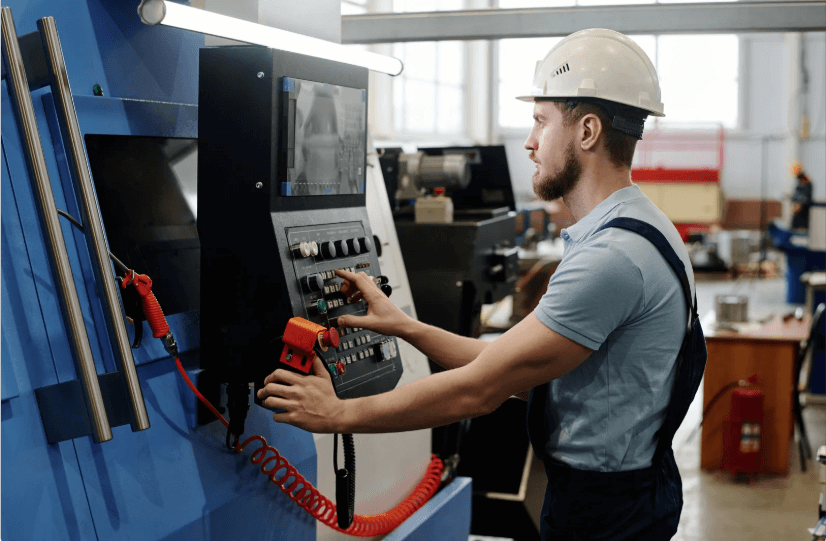
Battery Case Mould Buying Guide: Design, Materials, Cost & Common Defects
A battery case mould is not just a simple box mould. For battery manufacturers, it directly affects product safety, sealing performance, dimensional accuracy, production efficiency, and long-term reliability.
Whether you are producing automotive battery cases, motorcycle battery boxes, UPS battery containers, inverter battery housings, battery covers, or EV battery enclosures, the mould must be designed around the final application, plastic material, battery structure, assembly method, and production volume.
Design Focus
Core strength, separator wall accuracy, sealing surface flatness, draft angle and rib structure.
Material Focus
PP, ABS, FR-ABS, PC/ABS, PA66 GF, PBT and application-specific engineering plastics.
Cost Focus
Product size, mould steel, runner system, cavity number, cooling complexity and trial requirements.
Defect Focus
Side wall deformation, uneven separator wall thickness, weld lines, short shot, flash and poor sealing.
What Is a Battery Case Mould?
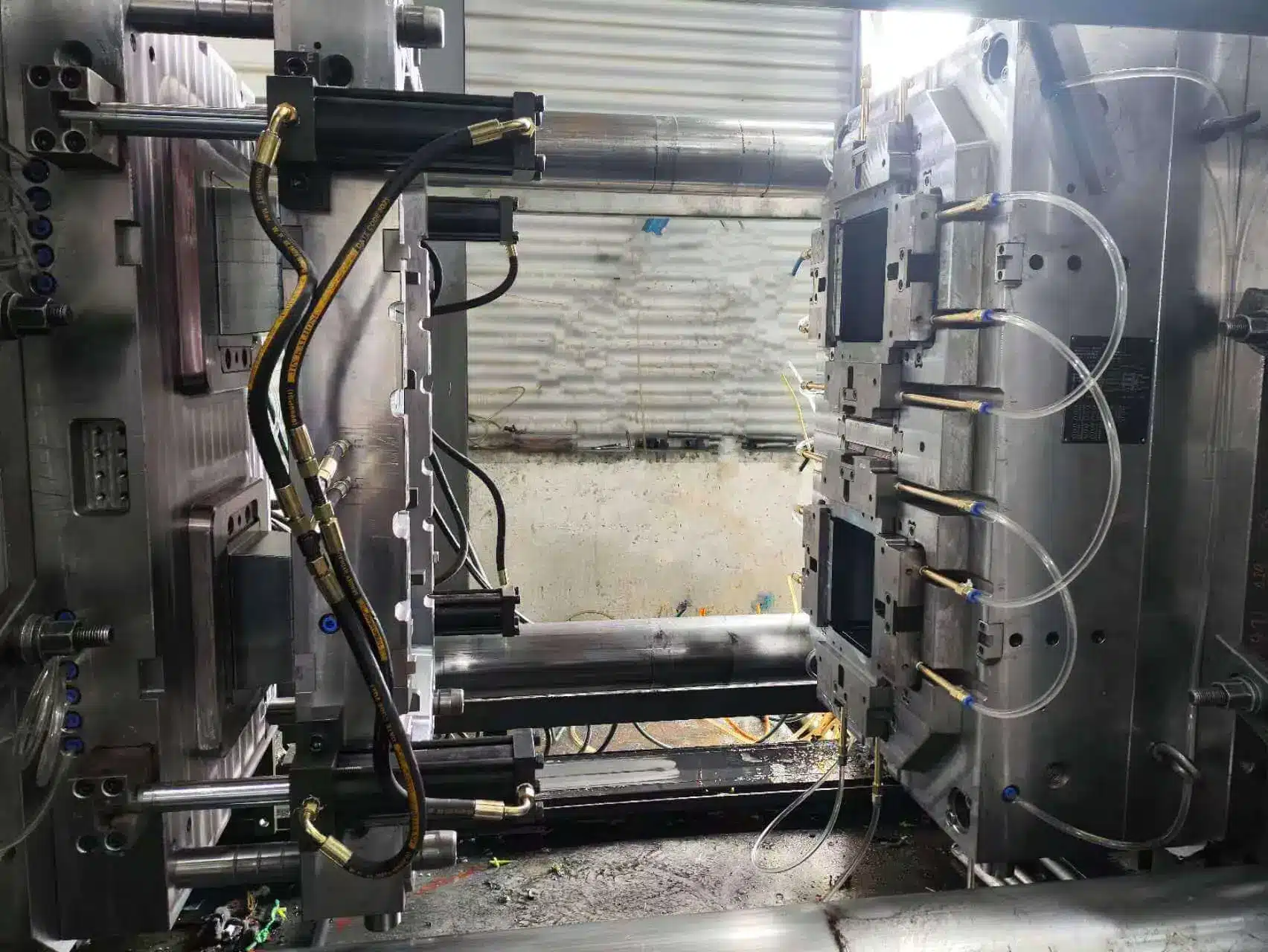
A battery case mould, also called a battery box mould or battery container mould, is an injection mould used to produce plastic housings for batteries. The mould usually includes a core, cavity, runner system, gate system, cooling channels, ejection system, inserts, and sometimes sliders or lifters.
Battery case moulds can be used to produce:
A good battery case mould should produce stable parts with accurate dimensions, consistent wall thickness, good sealing surfaces, controlled deformation, and repeatable production quality.
Battery Case Mould vs Battery Box Mould vs Battery Enclosure Mould
These terms are often used together, but they can refer to slightly different products.
| Term | Meaning | Common Application |
|---|---|---|
| Battery case mould | General mould for plastic battery housing | Automotive, UPS, motorcycle, industrial batteries |
| Battery box mould | Larger or protective battery box mould | Car battery box, outdoor power box, storage battery box |
| Battery container mould | Multi-cell battery jar mould | Lead-acid batteries, inverter batteries, UPS batteries |
| Battery cover mould | Mould for top lid or cover | Battery sealing and assembly |
| Battery enclosure mould | Higher-performance protective housing | EV battery pack, electronics, energy storage systems |
For buyers, the most important point is not the name. The key is whether the supplier understands the real function of the part: chemical resistance, sealing, dimensional stability, strength, assembly fit, and safe production.
Common Types of Battery Case Moulds
Different battery applications require different mould structures. A supplier who has only made simple plastic boxes may not be suitable for complex battery case projects.
Car Battery Case Mould
Car battery cases usually require good impact resistance, dimensional control, and stable production. The mould design must pay attention to internal cell walls, top sealing area, terminal position, bottom strength, wall deformation control, and cover matching accuracy.
Motorcycle Battery Box Mould
Motorcycle battery boxes are smaller than car battery cases, but they still require accurate fitting and stable production. Multi-cavity mould design may be considered depending on production volume.
UPS and Inverter Battery Case Mould
UPS and inverter battery containers often use multi-cell structures. The challenge is controlling the internal partition walls and maintaining consistent wall thickness.
Battery Cover and Lid Mould
The battery cover must fit the battery case accurately. If the top surface of the case is warped or the cover dimensions are unstable, sealing problems may occur.
EV Battery Enclosure Mould
EV battery enclosures are more demanding. They may require flame-retardant materials, tighter tolerances, insert moulding, thermal management, and high structural strength.
Vent Plug, Cap and Small Component Moulds
Battery cap and vent plug moulds are smaller, but they still require accurate fit, reliable venting structure, good surface quality and stable high-volume production.
Battery Case Material Selection
Material selection affects mould design, shrinkage, cooling, steel choice, processing conditions, and final product performance.
The most common materials for battery cases include PP, ABS, FR-ABS, PC/ABS, PA66, PBT, and other engineering plastics.
| Material | Common Use | Advantages | Design Risk |
|---|---|---|---|
| PP | Lead-acid battery cases, general battery containers | Chemical resistance, low cost, lightweight | Higher shrinkage, possible warpage |
| Recycled / modified PP | Industrial battery cases | Cost control | Material consistency must be checked |
| ABS | Battery boxes and covers | Good impact resistance and surface quality | Limited heat/flame performance |
| FR-ABS | Flame-retardant battery housings | Better fire resistance | Higher cost, processing control required |
| PC/ABS | EV or electronic battery enclosures | Dimensional stability, impact strength | Needs careful drying and mould temperature control |
| PA66 GF | High-strength battery parts | Strength and heat resistance | Moisture absorption, abrasive to mould steel |
| PBT | Electrical and high-voltage components | Good electrical properties | Flow and shrinkage must be managed |
How Material Affects Mould Design
A battery case mould cannot be designed correctly without confirming the plastic material first. Material affects shrinkage rate, gate size, runner design, cooling layout, draft angle, steel selection, surface finish, cycle time, deformation risk, and mould maintenance frequency.
Engineering note: PP is common for battery containers because of its chemical resistance and cost advantage, but its shrinkage and warpage must be controlled carefully. Glass-filled or flame-retardant materials may require harder or corrosion-resistant mould steel.
Key Design Requirements for Battery Case Moulds
Battery case mould design requires more attention than ordinary plastic box moulds. The part may look simple from the outside, but the internal structure can be difficult to mould correctly.
1. Uniform Wall Thickness
Uneven wall thickness can cause shrinkage marks, deformation, internal stress, and weak areas. Wall thickness should be reviewed around side walls, bottom ribs, internal partition walls, terminal area, cover sealing area, and corner transitions.
2. Internal Separator Wall Design
Many battery cases have internal cell walls. The mould core must be strong enough to resist injection pressure; otherwise, separator wall thickness may become inconsistent.
3. Draft Angle
Battery cases often have deep cavities and tall internal walls. Without proper draft angle, the part may stick to the core or become scratched during ejection.
4. Top Sealing Surface
The top edge of the battery case must match the cover or lid. Gate position, cooling balance, shrinkage, ejection force, and parting line precision must protect this area.
5. Rib and Bottom Strength
Ribs should improve stiffness without creating sink marks or excessive thickness. A good rib design considers thickness, height, radius, flow direction, stress concentration, and ejection position.
6. Assembly and Terminal Accuracy
Terminal holes, cover interface, clips, sealing zones and venting positions must be controlled because dimensional drift may cause assembly failure or leakage risk.
Gate and Runner Design for Battery Case Moulds
Gate and runner design directly affects filling balance, weld lines, pressure loss, cycle time, and part deformation.
Hot Runner vs Cold Runner
| Runner System | Advantages | Disadvantages | Best For |
|---|---|---|---|
| Cold runner | Lower mould cost | More material waste, longer cycle time | Low-volume or budget projects |
| Hot runner | Less waste, better filling balance, faster production | Higher mould cost, more maintenance | Mass production battery cases |
| Valve gate | Better gate control and appearance | Higher cost and complexity | High-precision or large battery enclosures |
Gate Location
Gate location should not be chosen randomly. Poor gate placement can cause weld lines in weak areas, air traps, short shots, uneven pressure, side wall deformation, and sealing surface distortion.
Before mould manufacturing, Moldflow analysis should be used to check the filling pattern, weld line position, air traps, pressure distribution, and warpage risk.
Cooling System Design
Cooling design is one of the most important factors in battery case mould quality. A poor cooling system can cause long cycle time, uneven shrinkage, side wall deformation, poor dimensional stability, warped top sealing surface, and unstable production.
Battery cases often have deep cavities and tall walls, so the cooling system must be designed around the real geometry of the part. In some high-demand moulds, special inserts or improved thermal-conductivity materials may be used to improve cooling in difficult areas.
Ejection System Design
Battery cases are often deep parts. They may grip the core tightly after cooling, especially when shrinkage is high. If ejection is not balanced, the part may deform, crack, scratch, or leave visible marks.
Ejector Pins
Common and economical, but pin position must avoid visible, sealing, or high-stress areas.
Ejector Blocks
Useful when larger ejection contact area is needed to reduce deformation and visible marks.
Stripper Plate
Often suitable for deep battery containers because it distributes ejection force more evenly.
The correct solution depends on part geometry, material, depth, shrinkage, wall height, and surface requirements.
Common Battery Case Mould Defects and How to Avoid Them
Battery case mould defects can create serious production and assembly problems. The best time to prevent these problems is before steel cutting.
| Defect | Possible Cause | Mould Solution |
|---|---|---|
| Side wall deformation | Uneven cooling, shrinkage, weak wall structure | Optimize cooling, adjust wall design, use Moldflow, pre-compensate deformation |
| Uneven separator wall thickness | Core deflection, poor core support | Strengthen core insert, improve steel support, balance filling |
| Short shot | Poor venting, long flow path, insufficient gate size | Improve gate/runner design, add vents, adjust process |
| Weld line weakness | Poor gate location | Optimize gate position with Moldflow |
| Burn marks | Trapped air | Add venting in last-fill areas |
| Sink marks | Thick ribs or bosses | Reduce thickness, optimize rib ratio |
| Flash | Poor fitting, high pressure, worn parting line | Improve mould precision, check clamping force, maintain mould |
| Ejector marks | Unbalanced ejection | Improve ejector layout, use larger ejection area |
| Poor cover sealing | Warped top edge or unstable dimensions | Improve cooling, control shrinkage, inspect flatness |
| Cracking around terminal area | Stress concentration, sharp corners | Add radius, improve material and flow design |
Why Battery Case Side Walls Deform
Side wall deformation is one of the most common issues in battery case injection moulding. It can be caused by long unsupported walls, uneven wall thickness, high material shrinkage, unbalanced cooling, poor gate location, insufficient packing, weak core support, and incorrect ejection force.
To reduce deformation, Topworks usually reviews the product structure, gate position, cooling layout, ejection method, and expected shrinkage before mould manufacturing.
- Adding or modifying ribs
- Adjusting wall thickness
- Improving core and cavity cooling
- Using Moldflow analysis
- Optimizing gate location
- Pre-compensating deformation in mould design
- Strengthening core inserts
- Controlling process parameters during trial
How Much Does a Battery Case Mould Cost?
Battery case mould cost varies widely. A small battery cover mould and a large automotive battery container mould cannot be priced in the same way. Instead of asking only “How much is the mould?”, buyers should understand what drives the cost.
Simple Battery Cover Mould
Usually lower cost because the part is smaller and less deep. However, terminal holes, flatness, sealing, and assembly accuracy still need attention.
Motorcycle Battery Case Mould
Medium complexity. The mould may include internal walls, cover fitting features, and precise dimensions.
Automotive Battery Case Mould
Higher complexity due to larger size, deeper structure, internal partitions, stronger core requirements, and deformation control.
UPS or Inverter Battery Container Mould
Can be complex because of multi-cell structures and internal separator walls. Core strength and wall thickness consistency are critical.
EV Battery Enclosure Mould
Usually the most demanding category because of part size, flame-retardant materials, insert structures, dimensional stability, and stricter testing requirements.
Why the Cheapest Mould May Cost More Later
A low-cost mould may create longer cycle time, higher scrap rate, poor sealing, warpage, frequent repair, short mould life, downtime and extra modification cost.
Battery Case Mould Manufacturing Process
A reliable battery case mould project should follow a clear process from product information review to final shipment.
Product Information Review
The buyer sends 3D drawings, 2D drawings, samples, material requirements, production volume, and injection machine information.
DFM Analysis
Topworks reviews wall thickness, draft angle, ribs, internal walls, sealing surface, shrinkage, and possible mould risks.
Moldflow Analysis
Moldflow helps predict filling pattern, weld lines, air traps, pressure distribution, shrinkage, warpage and gate balance.
Mould Design
The mould design includes parting line, core and cavity, runner, gate, cooling, ejection, inserts, venting and mould base.
Steel and Machining
After design approval, mould steel is prepared and machined through CNC, EDM, drilling, grinding, polishing and fitting.
Mould Assembly
All mould components are assembled, checked, fitted, and prepared for trial production.
T1 Trial
The first trial checks appearance, dimensions, filling, deformation, ejection marks and assembly fit.
Modification
Common corrections include gate adjustment, venting improvement, polishing, fitting correction, ejection adjustment and dimensional correction.
Approval and Shipment
After sample approval, the mould is cleaned, protected, packed and shipped with spare parts and mould documents.
What Information Should Buyers Send for a Quotation?
To get an accurate battery case mould quotation, prepare the following information:
| Information | Why It Matters |
|---|---|
| 3D drawing | Needed for mould design and cost evaluation |
| 2D drawing with tolerances | Needed for precision and inspection planning |
| Product sample photos | Helps understand real structure and assembly |
| Plastic material | Affects shrinkage, steel, gate, cooling, and process |
| Annual production volume | Helps choose mould steel and cavity number |
| Injection machine size | Ensures mould compatibility |
| Surface finish requirement | Affects polishing, texture, and draft angle |
| Flame-retardant requirement | Important for battery and EV applications |
| Assembly parts | Helps control cover, terminal, and sealing areas |
| Target cycle time | Affects cooling and runner design |
| Destination country | Affects packing, shipping, and standards |
How to Choose a Battery Case Mould Manufacturer
A battery case mould manufacturer should not only offer a low price. The supplier must understand plastic material, mould structure, battery case function, dimensional stability, and production risks.
Questions to Ask Before Ordering
- Have you made similar battery case moulds before?
- Can you provide DFM analysis before mould design?
- Can you provide Moldflow analysis?
- What steel do you recommend for the core and cavity?
- How will you prevent side wall deformation?
- How will you control separator wall thickness?
- What runner system do you recommend?
- What is the expected cycle time?
- How many trial modifications are included?
- What after-sales support do you provide?
Red Flags to Avoid
- Gives a price without reviewing drawings
- Cannot explain gate location
- Cannot explain cooling design
- Does not check injection machine compatibility
- Uses vague steel descriptions
- Does not provide DFM or Moldflow support
- Has no battery case mould experience
- Does not provide trial videos or sample reports
- Has no clear modification policy
- Only competes on the lowest price
Need a Battery Case Mould Quotation?
Send us your battery case drawing, sample photo, material requirement, injection machine information, and production volume. Topworks Plastic Mold can review your project and provide a custom mould solution.
Why Choose Topworks Plastic Mold for Battery Case Mould Projects?
Topworks Plastic Mold focuses on custom plastic injection moulds for international customers. For battery case mould projects, we support buyers from early design review to final mould delivery.
If your battery case has problems such as side wall deformation, poor cover fitting, separator wall thickness variation, or unstable dimensions, our engineering team can review the design and suggest mould improvement solutions.
FAQ About Battery Case Moulds
What is a battery case mould?
A battery case mould is an injection mould used to produce plastic battery cases, battery boxes, battery containers, covers, lids, caps, and enclosures.
What material is best for battery cases?
Common materials include PP, ABS, FR-ABS, PC/ABS, PA66, and PBT. The best material depends on the battery type, chemical resistance, flame-retardant requirement, impact strength, temperature, and cost target.
How much does a battery case mould cost?
The cost depends on product size, mould steel, cavity number, runner system, internal structure, cooling design, precision requirement, and testing requirements. A drawing or sample is needed for an accurate quote.
What causes battery case side wall deformation?
Common causes include uneven cooling, poor wall thickness, high shrinkage, poor gate location, weak core support, unbalanced packing, and incorrect ejection design.
Is hot runner better than cold runner for battery case moulds?
For high-volume production, hot runner systems are often preferred because they reduce material waste and can improve filling balance. For lower-volume or budget projects, cold runner may still be considered.
Why is Moldflow important for battery case moulds?
Moldflow helps predict filling, weld lines, air traps, pressure, shrinkage, and warpage before steel cutting. This reduces the risk of expensive mould modifications later.
How long does it take to make a battery case mould?
Lead time depends on mould size, complexity, steel, runner system, machining workload, and trial requirements. A simple mould may be faster, while large or complex battery case moulds require more time for design, machining, trial, and optimization.
What should I send to get a battery case mould quotation?
Send 3D drawings, 2D drawings, material requirements, production volume, injection machine information, surface finish requirement, tolerance requirements, and sample photos if available.
Final Advice Before Ordering a Battery Case Mould
A battery case mould should be evaluated by long-term production value, not only by the initial mould price.
Before ordering, make sure your supplier can explain material shrinkage, core strength, gate location, cooling system, ejection method, wall deformation control, separator wall accuracy, sealing surface protection, trial process, inspection process, and after-sales support.
A well-designed battery case mould can reduce scrap, improve cycle time, stabilize dimensions, and support long-term production.
If you are developing a new battery case, battery box, battery container, or battery cover, Topworks Plastic Mold can review your design and provide a mould solution based on your production requirements.
Send Your Battery Case Project to Topworks
Get practical feedback before mould manufacturing. Share your drawing or sample photos, and our engineering team will review the main mould risks for your battery case project.