Automotive Instrument Panel Mould Making
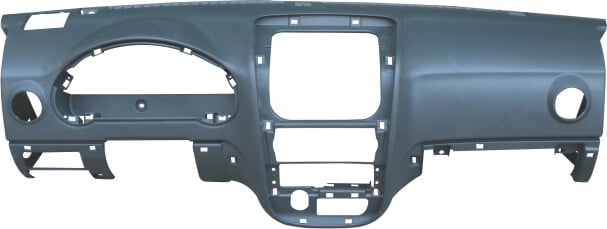
We build automotive instrument-panel moulds to global standards for steel, design and instruction — complete dashboards, air vents, display housings and control-panel frames. Premium steel, ±0.05 mm precision, conformal cooling and sequential valve-gate hot runners for large Class-A panels.

- Dashboards, vents, display housings
- P20/718H, H13, NAK80, BeCu
- ±0.05 mm, 100,000+ cycles
- Conformal cooling, valve-gate hot runner
Premium materials and core benefits
| Matériau | Where it is used |
|---|---|
| P20 / 718H (30–32 HRC) | Main cavity and core |
| H13 tool steel | High-wear areas and sliding components |
| NAK80 | Visible surfaces requiring a superior finish |
| Stainless steel | Cooling channels |
| Beryllium-copper | Enhanced heat-transfer zones |
- Durability: 100 000+ cycles avec un entretien adéquat
- Precision: tolerances of ±0.05 mm
- Thermal: operates effectively up to 180 °C (356 °F)
- Wear resistance: specialised surface treatments and coatings
Instrument panel components
Composants
- Assemblages complets de tableaux de bord
- Integrated air-vent systems
- Affichage des unités de logement
- Control-panel frames
- Storage-compartment components
Capacités
- Large single-piece moulding
- Compatibilité multi-matériaux
- In-mould decoration ready
- Options de surface douce au toucher
- Intégration avec les composants électroniques
Innovative engineering solutions
Cascade injection
Sequential valve-gate system for balanced filling of a large panel.
Conformal cooling
Channels that follow the part reduce cycle time by around 35%.
Gas-assist & core-back
Gas-assisted injection and variable wall-thickness optimisation for light, strong panels.
Instrument panel mould gallery


Building an instrument panel tool?
Send your panel data and volume. We’ll advise on steel, cooling, gating and surface, and quote it to global standard.
- Dashboards, vents, display housings
- ±0.05 mm precision, 100k+ cycles
- Conformal cooling & valve-gate hot runner
Instrument panel mould FAQ
What steel is used for an instrument panel mould?
P20 or 718H pre-hardened steel (30–32 HRC) for the main cavity and core, H13 for high-wear areas and sliding components, NAK80 for visible surfaces needing a superior finish, stainless steel for cooling channels, and beryllium-copper alloys in high heat-transfer zones.
What tolerance and durability can an instrument panel mould hold?
High-precision instrument-panel tooling maintains tolerances of about ±0.05 mm, delivers 100,000+ cycles with proper maintenance, operates effectively up to ~180 °C, and uses specialised surface treatments and coatings for wear resistance.
What engineering features reduce cycle time on panel moulds?
Conformal cooling channels can cut cycle time by around 35%. Combined with a cascade (sequential valve-gate) injection system for balanced filling, gas-assisted injection and variable wall-thickness optimisation, the tool fills a large panel evenly and cools fast.
What instrument-panel components can you mould?
Complete dashboard assemblies, integrated air-vent systems, display housing units, control-panel frames and storage-compartment components — with large single-piece moulding, in-mould decoration and soft-touch surface options.
Can instrument panel moulds integrate multiple materials or electronics?
Yes — multi-material compatibility, in-mould decoration, soft-touch surfaces and integration with electronic components are all supported, using core-back technology and sequential valve-gate hot runners.